
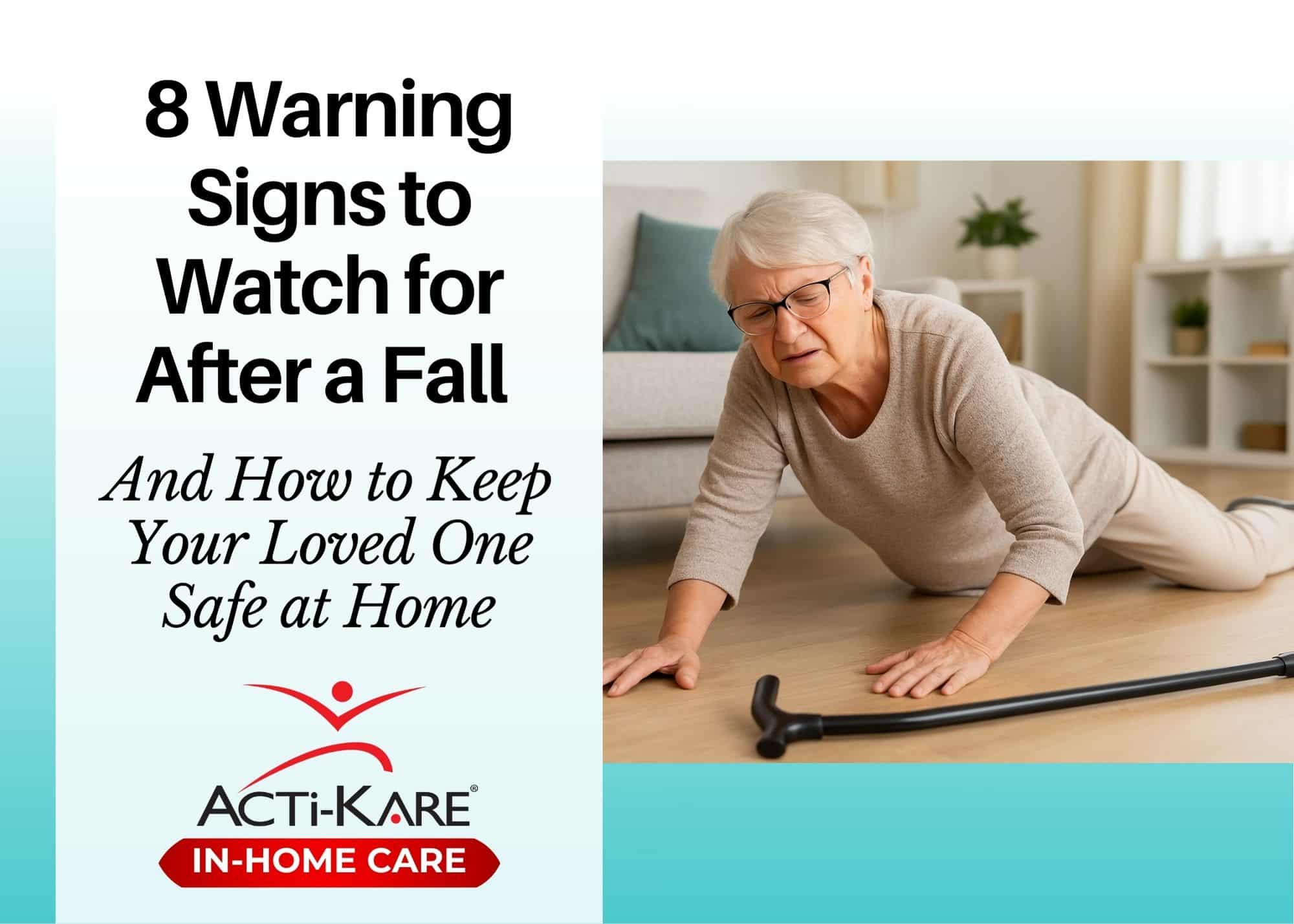
Falls are one of the leading causes of injury among older adults — and they happen more often than you might think. According to the CDC, 1 in 4 seniors over age 65 experiences a fall each year, and 1 in 5 of those falls results in serious injuries like fractures, head trauma, or internal bleeding.
If your aging parent or loved one has fallen, knowing what to look for afterward can help you spot hidden injuries early and prevent future falls. This guide explains eight critical symptoms to watch for, tips to reduce fall risks at home, and how in-home care services can keep your loved one safe and independent.
8 Symptoms to Watch for After an Elderly Fall
1. Cuts, Bruises, and Lacerations
Small cuts and bruises are common, but pay close attention to size and location:
- Minor bruises on arms or legs → usually less serious but monitor for changes
- Large abdominal or chest bruises → could indicate internal bleeding
- Deep cuts that won’t stop bleeding → require urgent medical attention
Pro Tip: Seniors on blood thinners or with clotting disorders should be evaluated even for seemingly minor injuries.
2. Sudden Confusion or Behavioral Changes
After a fall, confusion, agitation, or unusual sleepiness may signal:
- A concussion
- Brain bleed
- Stroke
- Internal bleeding
What to do: Seek medical attention immediately. These symptoms are considered medical emergencies.
3. Head, Neck, or Spine Pain
Warning signs of a possible head or spinal injury include:
- Persistent headaches
- Sensitivity to light
- Uneven pupils
- Difficulty moving the neck
If your loved one hit their head — even lightly — don’t wait to see if symptoms worsen. Go to the ER for evaluation.
4. Swelling, Tingling, or Trouble Moving Limbs
Swelling around joints, numbness, tingling, or sudden weakness can signal a fracture, nerve compression, or spinal cord injury.
Left untreated, these injuries can lead to long-term mobility issues, chronic pain, or permanent disability. Always have them evaluated right away.
5. Irregular Heartbeat or Dizziness
Sometimes a fall happens because of a medical issue rather than just balance loss. Watch for:
- Heart palpitations
- Shortness of breath
- Feeling faint
A medical evaluation can rule out heart arrhythmias, low blood pressure, or other hidden health problems contributing to falls.
6. Persistent Pain or Tenderness
Pain that doesn’t improve or worsens over time — especially around the hips, ribs, or spine — may indicate a hidden fracture. Seniors are particularly vulnerable to hip fractures after falls, which often require surgery and extended recovery.
7. Vomiting or Sudden Incontinence
These can indicate a concussion, brain bleed, or internal injury. Seek immediate medical care if your loved one experiences vomiting, dizziness, or loss of bladder or bowel control after a fall.
8. Vision Changes
Blurry vision, double vision, or sudden partial blindness may suggest a stroke, head trauma, or retinal damage. Fast evaluation is critical to prevent permanent vision loss or further complications.
Why Falls Happen — and How to Prevent Them
Understanding why seniors fall is the first step to prevention. Common causes include:
- Muscle weakness and balance decline
- Poor vision or hearing
- Medication side effects
- Cognitive changes and memory loss
- Chronic illnesses (diabetes, arthritis, heart disease)
- Home hazards like loose rugs, clutter, or poor lighting
5 Simple Ways to Lower Fall Risks at Home
1. Strength & Balance Exercises
Light movement such as walking, yoga, tai chi, or resistance band exercises can improve stability.
2. Schedule Eye & Hearing Exams
Sensory loss is one of the leading contributors to falls.
3. Review Medications
Ask your loved one’s doctor about side effects like dizziness or drowsiness.
4. Remove Home Hazards
- Install grab bars and non-slip mats
- Improve lighting in hallways and stairwells
- Remove clutter and secure loose rugs
5. Use Assistive Devices
Encourage use of walkers, canes, or shower chairs if balance is an issue.
How In-Home Care Helps After a Fall
If your loved one has fallen or is at risk, professional in-home care can make a significant difference:
- Help with safe mobility and transfers
- Monitor for injury warning signs
- Assist with bathing, dressing, and daily activities
- Provide medication reminders to avoid dizziness
- Offer companionship and emotional support
At Acti-Kare Responsive In-Home Care, we specialize in fall prevention strategies and personalized senior care plans designed to keep your loved one safe, comfortable, and independent at home.
When to Call for Help
If you suspect a serious injury after a fall, don’t wait. Call your doctor, urgent care, or 911 if necessary. Quick action saves lives and prevents long-term complications.
If you or an aging loved one is at risk of a fall, consider bringing on a caretiver to assist with mobility and reduce risks.
Acti-Kare provides exceptional senior home care across King County, Pierce County, and Snohomish County; including Bellevue, Kirkland, Kenmore, Bothell, Lynnwood, Woodinville, Redmond, Sammamish, Shoreline, Everett, Renton, Tacoma, and surrounding areas.